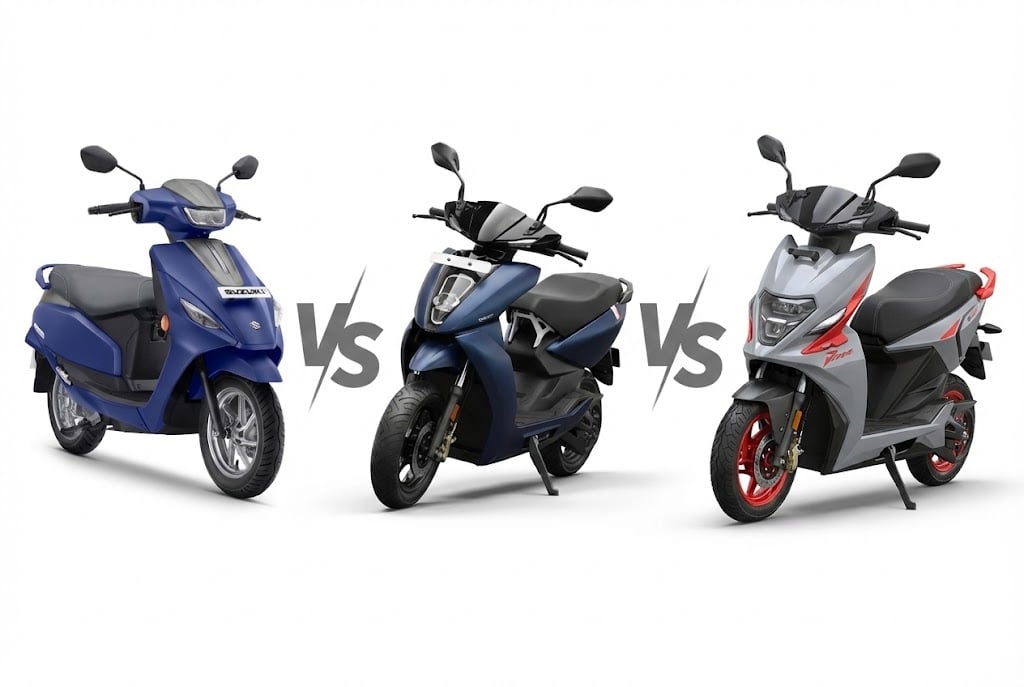
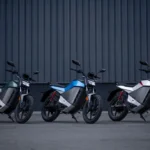
Suzuki e-Access Price Comparison: vs Simple One Gen 2 and Ather 450X
Suzuki e-Access Price Comparison: vs Simple One Gen 2 and Ather 450X
January 9, 2026
Suzuki e-Access vs Simple One Gen 2 and Ather 450X: Price and Value Analysis
The Indian electric scooter market is witnessing a significant shift in 2026 as legacy manufacturers and startups battle for dominance. The recent launch of the Suzuki e-Access has stirred the market, primarily due to its premium pricing compared to established players like Ather Energy and high-performance entrants like Simple Energy. While the Suzuki e-Access carries a higher ex-showroom price, its focus on longevity, brand reliability, and a unique buyback program presents a compelling case for pragmatic buyers.
Suzuki e-Access: Premium Price for Long-Term Reliability
The Suzuki e-Access is positioned at the higher end of the spectrum with an ex-showroom price (Delhi) of INR 1,88,490. While this may seem steep compared to the base variants of its competitors, Suzuki is leveraging its massive brand value and service network.
Unlike many competitors that use NMC (Nickel Manganese Cobalt) batteries, the e-Access utilizes LFP (Lithium Iron Phosphate) battery technology. LFP batteries are known for significantly higher thermal stability and a longer life cycle, meaning the battery capacity degrades much slower over years of usage. Furthermore, Suzuki offers a standout buyback assurance, guaranteeing 60% of the cost back within 2-3 years, a move designed to protect the resale value of the vehicle.
Simple One Gen 2: The High-Range Alternative
Simple Energy has recently refreshed its lineup with the Simple One Gen 2 and the Simple Ultra. These scooters are designed to appeal to the youth, offering a “fancy” aesthetic and industry-leading range figures. The Simple Ultra boasts an IDC range of up to 400 km with its 6.5 kWh battery. With multiple battery and range options, Simple Energy provides more flexibility for those who prioritize long-distance commuting and high-tech features.
Ather 450X and Rizta: The Standard for Performance and Utility
Ather Energy remains a top contender, though it has implemented a price hike of up to INR 3,000 starting January 1, 2026. The Ather 450X continues to be the benchmark for performance and software integration, while the Ather Rizta targets the family segment with more space and comfort. Even with the price hike, Ather’s top-end models remain more affordable than the Suzuki e-Access in terms of initial purchase price.
Price Comparison (2026 Models)
The following table compares the ex-showroom prices of the primary variants across these three brands:
Model
Variant
Battery Capacity
Ex-Showroom Price (INR)
Suzuki e-Access
Standard (2026)
LFP Tech
1,88,490
Simple One Gen 2
5 kWh Variant
5 kWh
1,77,999
Simple One Gen 2
4.5 kWh Variant
4.5 kWh
1,69,999
Simple OneS Gen 2
3.7 kWh Variant
3.7 kWh
1,49,999
Ather 450X
Top Variant
3.7 kWh
1,60,999
Ather 450X
Base Variant
2.9 kWh
1,50,999
Ather Rizta
Rizta Z (Top)
3.7 kWh
1,54,998
Why Choose Suzuki e-Access Over Competition?
While the Simple One Gen 2 offers more range and the Ather 450X offers a lower entry price, the Suzuki e-Access focuses on the “Total Cost of Ownership.”
Battery Longevity: The LFP battery is better suited for Indian climates and lasts longer than NMC batteries found in many other e-scooters.
Resale Value: The 60% buyback offer is currently unmatched in the industry, providing peace of mind to first-time EV buyers.
Service Network: Suzuki’s established network of dealerships and service centers ensures that maintenance is never a hurdle, a common pain point for newer EV startups.
Build Quality: Suzuki maintains a reputation for high-quality plastics and mechanical reliability that has been proven over decades in the internal combustion engine (ICE) market.
Frequently Asked Questions (FAQs)
1. Is the Suzuki e-Access more expensive than the Ather 450X?
Yes, the Suzuki e-Access is priced at INR 1,88,490, which is higher than the top-end Ather 450X (INR 1,60,999).
2. What is the benefit of the LFP battery in the Suzuki e-Access?
LFP batteries are safer, have better thermal management, and offer a longer lifespan compared to the NMC batteries typically used in other electric scooters.
3. Does Suzuki offer a buyback guarantee?
Yes, Suzuki offers a buyback program where they assure 60% of the cost of the e-Access within the first 2-3 years of ownership.
4. Which scooter offers the highest range?
The Simple Ultra (part of the Simple One Gen 2 series) offers the highest IDC range of up to 400 km.
5. Why are Ather prices increasing in 2026?
Ather Energy has announced a price hike of up to INR 3,000 across its models effective from January 1, 2026, due to rising input costs and market adjustments.