Royal Enfield’s Urgent SOS to Govt on GST Hike over 350cc Bikes
Royal Enfield’s Urgent SOS to Govt on GST Hike over 350cc Bikes
August 30, 2025
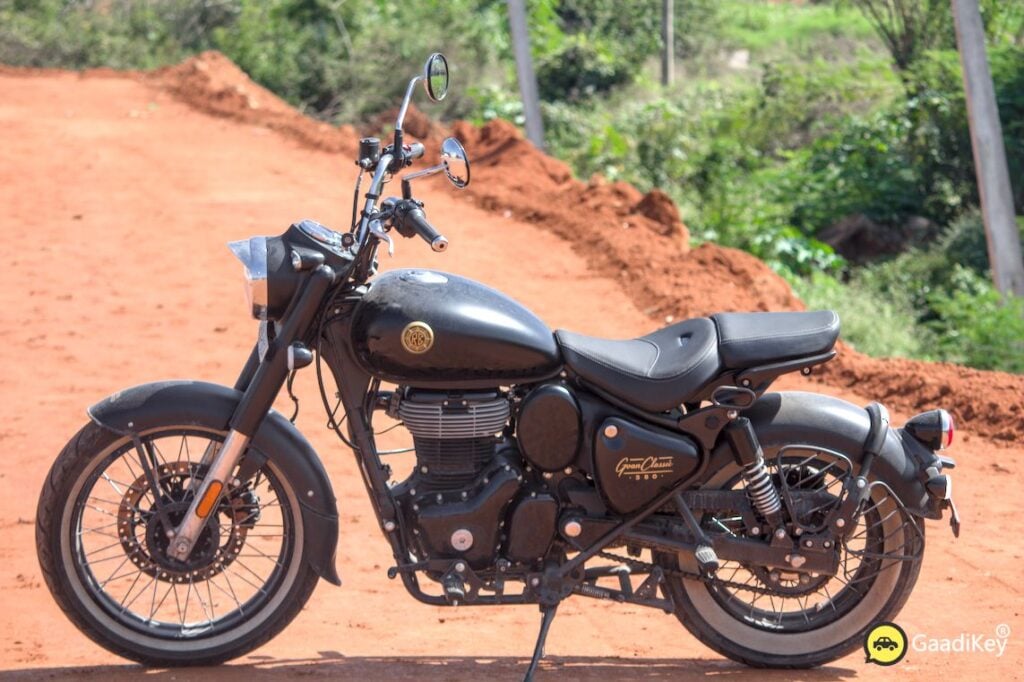
Royal Enfield‘s Siddhartha Lal makes an urgent request to Indian policymakers for a uniform 18% GST on all two-wheelers. He argues that a split tax regime would cripple India’s global leadership, stifle investment, and give foreign competitors an opening in the vital >350cc motorcycle segment.
Siddhartha Lal, the top boss of Royal Enfield, has issued an urgent request to India’s policy makers, advocating for a uniform 18% Goods and Services Tax (GST) on all two-wheelers. He argues that maintaining a split tax regime, with higher rates for larger-displacement motorcycles, would undermine India’s global leadership in the two-wheeler industry. According to Lal, this is a matter of securing India’s global edge and ensuring the long-term success of the “Make in India” initiative.
Hello Everyone, this is an urgent and heartfelt appeal to our respected policy makers and the public regarding the recent GST announcement. Please spare a few minutes time to go through this – the Indian motorcycling industry needs your support!#TwoWheelsOneGST#MakeInIndiapic.twitter.com/Hl1Iyfo94z
The two-wheeler industry is highlighted as “the clearest success story of the Make in India initiative,” and the only manufacturing sector where Indian brands lead globally. This success, driven by strong government support and a large domestic base, has allowed Indian manufacturers to achieve unmatched scale and capability. While Indian brands have historically dominated the small-capacity segment worldwide, heavy investment is now enabling deep inroads into the mid-capacity motorcycle segment, drawing riders from larger, higher-displacement machines.
According to Lal, to sustain this momentum, a uniform 18% GST across all two-wheelers is critical. He warns that while lowering GST for models below 350cc would help broaden access, raising the tax rate for motorcycles over 350cc would be damaging to a segment vital for India’s global aspirations.
Lal’s message breaks down the critical dangers of a split tax regime, which he believes would have three major negative consequences:
Crippling Investment and Scale: A differential GST rate would “dramatically shrink the domestic >350cc segment” and “choke the investment needed for India to compete globally”.
Restricting Global Reach: A punitive GST would force Indian brands to focus on smaller-capacity two-wheelers, thereby undermining their ability to build strong dealer networks and brand equity worldwide.
Handing an Opening to Foreign Competitors: Rivals from other countries could seize the mid-size segment internationally and then push back into the smaller-capacity market where India currently leads.
Furthermore, Lal emphasizes that motorcycles above 350cc constitute only about 1% of India’s total two-wheeler market. Therefore, raising GST on this segment would add “negligible revenue” but would severely contract the market. He also clarifies that these motorcycles are not seen as luxury goods by Indian riders, but as “efficient, affordable alternatives” that help reduce India’s fuel imports.
The vision for a uniform 18% GST is not just about sustaining the current market but about enabling India to dominate the global electric two-wheeler market and establish itself as the “world’s hub for next-generation mobility”. This would, in turn, anchor allied industries—from batteries to semiconductors—creating a powerful manufacturing ecosystem that ensures India’s global leadership for decades to come.
You can add more to this story by commenting below.